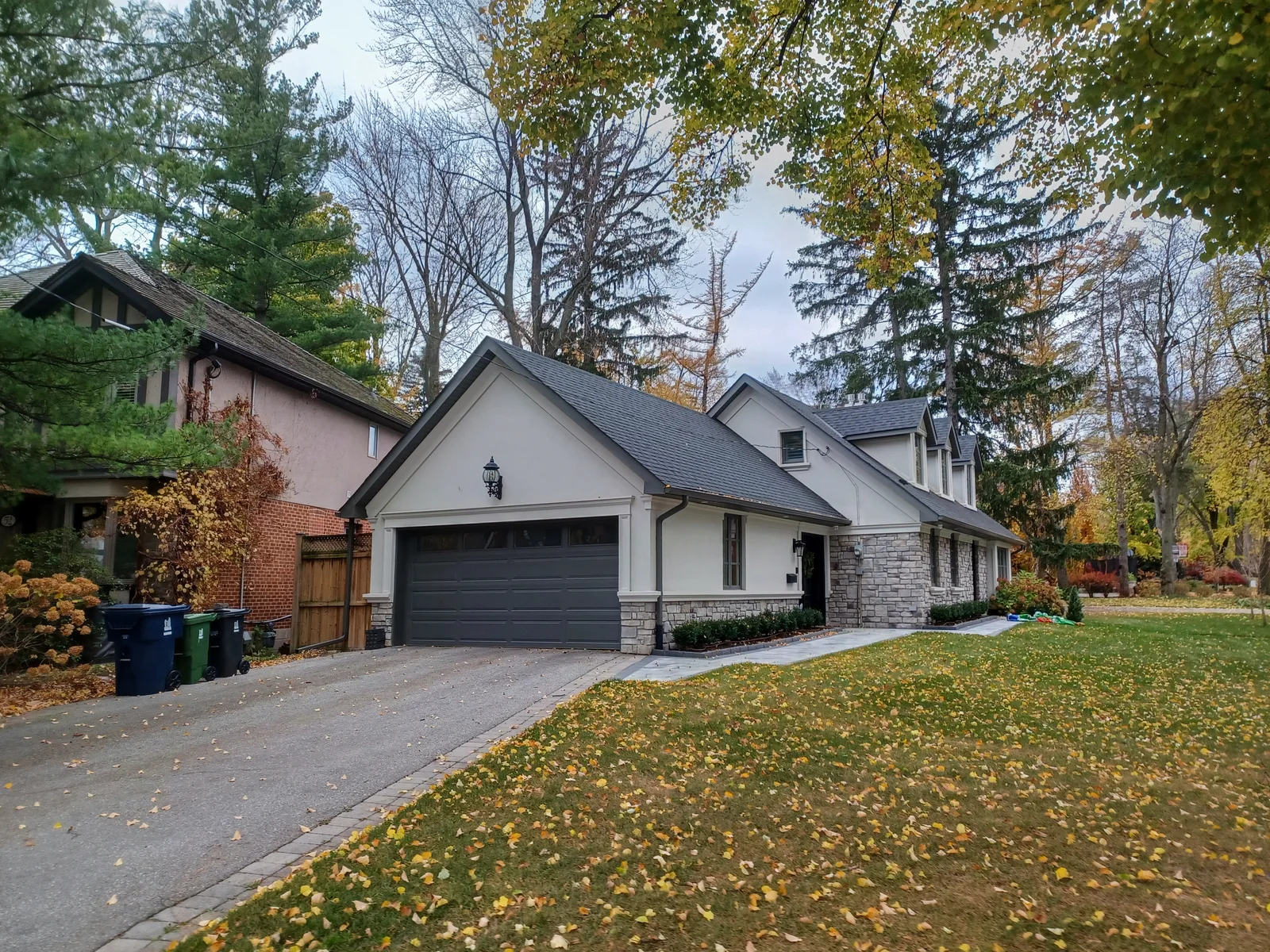
Emergency repair after wind lifted a section of ridge cap and pulled back step flashing at the chimney. Missing shingles replaced, chimney flashing re-bedded in polyurethane, and valley re-sealed.
Illustrative photo, not a confirmed Smith's project
[OWNER TO CONFIRM: project descriptions, dates and photography]. Existing case-study content is unverified; imagery is illustrative.
Retained project example — confirmation pending
The homeowner called during a heavy rain event — water was coming through the ceiling directly below the chimney. An August windstorm had damaged the ridge cap and loosened flashing two weeks earlier.
Eight ridge cap shingles blown off, exposing the felt underlayment. Chimney step flashing on the windward side had lifted and the mortar seal was cracked, allowing water to channel directly into the wall cavity. The rear valley showed a worn patch where granules had worn through to the mat.
Scope considerations
The ridge cap damage was straightforward, but the chimney flashing was the real culprit. Original mortar-only installation had developed hairline cracks over the years — a common issue on Niagara Falls homes where the freeze-thaw cycle is especially aggressive near the escarpment. We re-bedded the flashing in polyurethane rather than mortar to give it flexibility. The ceiling stain dried out completely within two weeks of the repair.
IKO Cambridge architectural shingles (Driftwood) — matched to existing roof
New aluminum step flashing at chimney — both sides
Polyurethane sealant at all chimney flashing joints
Modified bitumen valley liner replacement — rear valley (12 ft)
IKO ArmourGard ice & water shield under replaced valley section